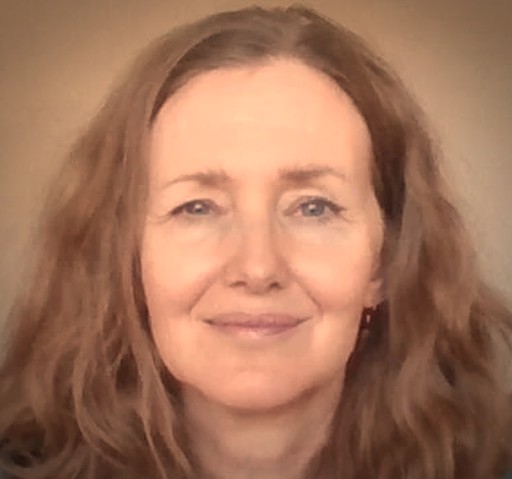
Rhonda Mills (she/her) is a trauma-informed guide, somatic coach, collective trauma facilitator, and teacher / trainer who is deeply engaged in cultural transformation and collective healing. Her approach is informed by mysticism and principles of healing, nonviolence and social justice. Her lived experience, way of being, and ongoing dedication to her own individual, ancestral, and collective / systemic healing journey is the ground for all her work.
Rhonda works with sensitive, deep-feeling people who feel the pull toward their radical authenticity. She offers somatic sessions, conflict transformation processes, and experiential classes. She co-leads groups where people come together to heal ancestral and collective trauma on topics such as gender, race, or land.
What makes this journey different
This journey includes your whole system: your physical experience and sensing, your emotions and what you believe about yourself, what you carry from your past and your people, what you’re longing for, your lived experience and interpretation of the world around you.
When you know how to connect with your natural humanness through your body, emotions, history, and longing, your connection becomes the ground which moves you forward. Your problems are a step in a process. What you need lives in a real, embodied, relational orientation toward what is already in you. What is already moving through you.
When you refine how you listen to your felt experience, a shift happens. You’re not only inside the problem any more. You connect with your experience of what’s difficult not as a problem to fix, but as a fundamental signal that gives you powerful information. From there, your emotions begin to unfold meaning. Your choices become clearer. You find your own unique way forward.
It works because you discover what is available inside you both from your direct body experience and through relational mirroring, showing you how to be with yourself, to include more of yourself. You come to understand your own process. Where your body signals you, your feelings unfold meaning for you, and you choose how and where you want to express yourself. That learning doesn’t stay in the session. It moves with you into your daily life.
Conflict Transformation
Finding your way back to each other ~ and to yourself. Something has broken down between you and someone who matters. Maybe it’s a conversation that keeps going wrong. A distance that has grown. A rupture that hasn’t been repaired. A pattern you both seem stuck inside, no matter how much you want out of it.
You know something needs to change. And you know you can’t get there alone.
What didn’t work
Many people who come to me for support with conflict resolution have tried to work through the conflict without outside support, and find that they need help to create a bridge between them. To create a compassionate space that allows them to move through the challenge of the conflict and includes both their own experience and the experience of the other. Some have already tried outside support, either through a therapist or mediation, which didn’t work. Often methods don’t work because they leave out the role of the body. When stronger stress levels that are present in one or both people are not being acknowledged or addressed, the level of connection and understanding that brings resolution is not as accessible.
What can get in the way:
How this works
My approach to conflict transformation is rooted in the same somatic, relational practice that runs through all my work. Our bodies experience and hold the pattern of the conflict. Slowing down to pay attention to what’s happening in you, in the other, and in the space between the two of you is where we begin to meet the conflict. The most important capacity in relational conflict is being able to stay curious about your own experience while you are in relation with another person. Genuinely connected to what is alive in you, and growing your capacity to meet what is genuinely alive in them. That capacity is something that can be built. And it changes everything.
How the work unfolds
I begin with an individual session with each person. It’s makes a real difference when each person has had the space to connect with and share their own experience, to be heard without the pressure of the other person in the room, before they arrive to the shared sessions. More of themselves becomes available.
From there, we move into sessions together ~ three to begin, with the option to continue as needed. The shared sessions are a practice of learning to stay with yourself while genuinely present to another person who matters to you.
What becomes possible
When you do this work, something shifts in how you meet what’s difficult. Inside yourself first, and then between you.
Rhonda’s background
Rhonda has coached and trained hundreds of executives, teachers, parents, couples, therapists, ministers, and healers. She created and led certifications trainings for embodiment coaches and yoga teachers in the U.S. and Canada. She is an experienced trainer and group facilitator who has led hundreds of groups on topics such as personal development, spirituality, emotional literacy, compassionate nonviolent communication, conflict resolution / relational healing, transformational leadership, embodied integrity, creative expression, inner wisdom, meditation, conscious movement, eating disorder recovery, global social witnessing, and racial identity. Rhonda has experience working in organizations, community groups, churches, in-patient recovery centers, schools, as well as online.