

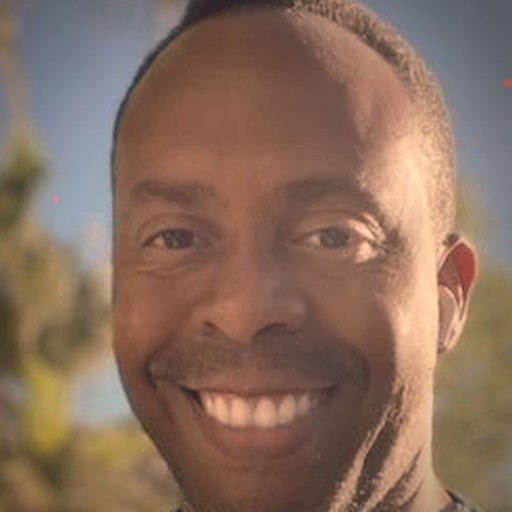
Remember it like yesterday. Paralyzed by the pain of divorce, the impact it was having on my two young boys, the uncertainty of being single and dating in my 40s — I was in an emotional tailspin, and my internal judgments were turned up to 10. That was when I stumbled into a talk on something called Nonviolent Communication (NVC). The year was 2016.
Fast forward to today. I find myself at a family event surrounded by my new partner, her daughter — my bonus daughter — my boys, their mom, and their mom’s partner, savoring a sense of harmony, love, respect, ease, and happiness. I attribute this family formation in large part to my embracing NVC, first as a skill set and ultimately as a consciousness that has accompanied me through the entire journey.
Working with young men in juvenile halls, I have witnessed a familiar cry for support much like the one I experienced — to be seen and heard in a world that often reinforces a story of worthlessness. One day a teen looked at me and said quietly, “Sir, most of us are in here because of our anger issues.” His honesty is something I encounter often — not only around anger, but across the whole kaleidoscope of human expression. And although he may be locked up, there is liberation in the moments when I invite young people to name what they feel and to guess at the needs those feelings are pointing to.
My work as an NVC trainer is to stay curious — to keep learning how the compass of compassion can lead people toward clarity and connection, with themselves and with those around them. This is what I call the lightbulb moment. It does not whisk away the challenge of being incarcerated, or the choices that may have led them there. But it offers a key: a restorative way of talking to one’s self, and to others, even in the middle of the storm.
Over time, I noticed that these two parts of my life were telling me the same thing. Building a blended family taught me how much repair is possible when a man is willing to be honest about what he feels and needs — and how rare it is that anyone teaches men to do that. The young men in the halls were showing me the other end of the same story: boys who had never been given the language, growing into men who would carry that silence for the rest of their lives unless someone interrupted it. I had been one of those men. I knew the cost of the silence firsthand, and I knew, now, that there was a way out of it.
That is why I created an online community specifically for men who are tired of pretending — men navigating midlife, loneliness, divorce, fatherhood, and the quiet ache of disconnection that many, like myself, were taught to ignore. The community exists to give men what many were never offered: a place to learn this language, to practice it among other men, and to discover that vulnerability is not the opposite of strength but the beginning of it.
My larger aspiration is to co-create a society of humans familiar with this technology of the heart — folks who know how to be with what is alive in themselves, and who therefore know how to be with it in their partners, their children, their friends, and their communities. I believe that when men learn to speak from feelings and needs translating what appears as fear and armor, it does not stay contained in them. It moves outward. It changes how they parent, how they partner, how they lead, how they grieve, and how they restore. That, for me, is how a better world gets built — not all at once, but one person at a time, one honest conversation at a time.
My assessor, Jim Manske, once said, “Empathy is simply being with what is.” It is something I have learned to lean into — celebrating what is working in my life, mourning what is not, and honoring everything in between. It is the work I will spend the rest of my life sharing, within my family, with the boys in the halls, with the men in the community, and with anyone else willing to come home to themselves.