

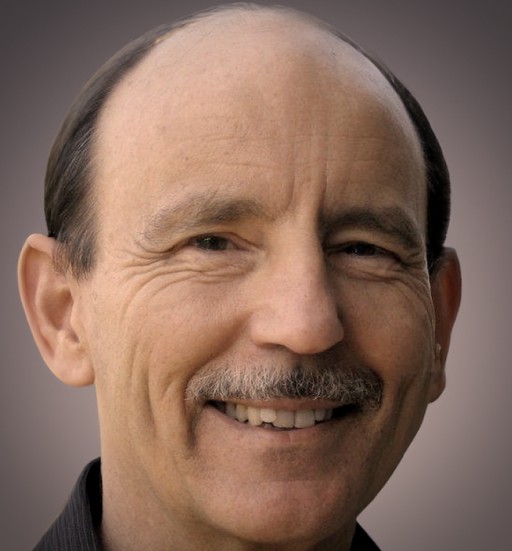
A groundbreaking exploration of human motivation’s highest expressions with renowned transpersonal psychiatrist Roger Walsh. What drives us at our deepest levels
? Beyond survival, safety, and even self-actualization lies a terrain of motivation that most psychology has yet to map. In this profound presentation, Dr. Roger Walsh — psychiatrist, philosopher, and contemplative scholar — takes us on a journey through the farther reaches of human motivation, revealing five meta-motives that culminate in what may be our species’ highest calling. Roger begins with Maslow’s famous hierarchy but pushes far beyond it, unveiling a startling paradox: the most advanced stages
of human development require us to transcend motivation itself. Drawing from decades of cross-cultural research and personal contemplative practice, he reveals how the deepest satisfaction can only be found by not seeking it—a counterintuitive wisdom echoed across the world’s mystical traditions. From selfless service to what he calls “transpersonal spontaneity” — the state where the universe acts through us rather than we acting from ego — Roger maps the territory where psychology meets spirituality at its most sophisticated edge. The second half presents Roger’s revolutionary idea of the “Bodhisattva 2.0” — an updated version of Buddhism’s 2,000-year-old ideal of awakening for the benefit of all beings. With characteristic blend of scholarly rigor and practical wisdom, Walsh identifies seven crucial upgrades needed for our contemporary world: Perhaps most urgently, Roger demonstrates how humanity has reached an unprecedented inflection point: for the first time in history, every major global crisis is human-caused. Our technological power has become so immense that the external world now mirrors our internal psychological and spiritual development. The very qualities that contemplative traditions cultivate—wisdom, compassion, clarity—are precisely what our species needs to navigate the challenges ahead. This isn’t abstract philosophy. Roger argues that there may be only two kinds of people: Bodhisattvas and those who don’t yet recognize themselves as such. In a world facing climate change, political polarization, and existential risks from our own creations, the integration of inner development with outer action has never been more critical. Combining the precision of clinical psychology with the depth
of contemplative wisdom, Roger offers both a map for individual development and a blueprint for collective transformation
. This is essential listening for anyone interested in the intersection of spirituality and psychology, the future of human consciousness, or simply understanding what it means to live a deeply meaningful life in our complex times. —Recorded at the 2024 ICON Conference in Denver, Colorado
Motivation isn’t about getting what you want — it’s about transcending the very act of wanting.
The deepest human fulfillment comes not from achieving our goals, but from discovering that the quest itself creates the very dissatisfaction it seeks to resolve. True peace emerges when we stop trying to become other than we are.
Spiritual
practice isn’t about personal enlightenment
— it’s about becoming an instrument of service.
The individualistic pursuit of awakening ultimately reveals itself as another form of ego-seeking. Authentic realization dissolves the boundary between personal development and universal benefit.
Ancient wisdom traditions possess spiritual technologies that need contemporary upgrades.
The Bodhisattva ideal, formed 2,000 years ago, requires integration with modern psychology, pedagogy, and global awareness. Tradition without evolution becomes dogma; evolution without tradition becomes superficial.
Global crises aren’t external problems to solve — they’re symptoms of our collective psychological immaturity.
For the first time in history, every major threat facing humanity is human-caused. Our technological power has made the external world a mirror of our internal development. We can’t fix “out there” without transforming “in here.”
The Bodhisattva vow isn’t a goal to achieve — it’s a North Star to follow.
Treating ideals as accomplishable objectives leads to spiritual burnout and despair. The aspiration to serve all beings is a directional orientation that transforms us through the very attempt, not a finish line we cross.
Professional life isn’t separate from spiritual practice — it’s the arena where awakening gets tested and expressed.
We need “professional Bodhisattvas” who integrate contemplative wisdom into law, psychology, politics, and business. The monastery and the marketplace are not different worlds but different expressions of the same commitment.