

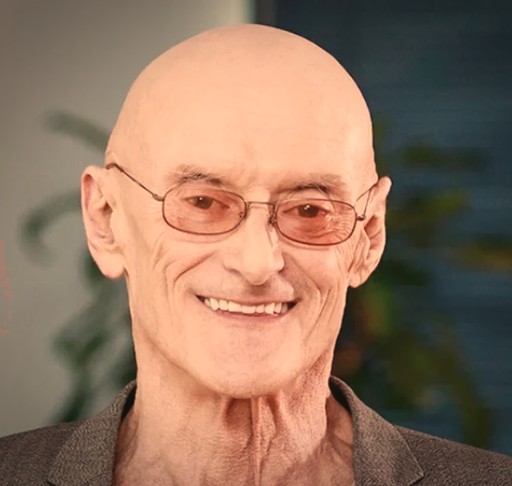
In 1997 Ken Wilber published his groundbreaking and widely celebrated book, The Eye of Spirit: An Integral Vision for a World Gone Slightly Mad
, which followed his seminal book Sex, Ecology, Spirituality
by applying his Integral approach
to important fields like psychology, spirituality, anthropology, cultural studies, art and literary theory, ecology, feminism, and planetary transformation. At the core of The Eye of Spirit
is a fairly simple premise — that all of us possess three primary modes of perception that we use to disclose reality: Watch as Ken introduces some of these central ideas from The Eye of Spirit
. At the time The Eye of Spirit
was published, it was not yet clear what the relationship was between the vertical stages
of “growing up” and the major state-stages
of “waking up”. This insight would not arrive until the early 00’s and the emergence of the “Wilber-Combs Matrix
”, which shows how all of these states
are available to us at every step of our growth and development. This helps explain how people can have any number of state experiences at any time – whether emotional states, spiritual states, or other non-ordinary states – but will always interpret those experiences according to whatever developmental level they happen to be at. Before this new integration, the integral model simply stacked the spiritual states-stages on top of developmental structure-stages
— which seemed to make a a lot of sense at the time! But when the Wilber-Combs Matrix did finally emerge, it represented a major new evolution
in Ken’s thinking. Watch as Ken explains how this confusion arose in the first place, and how he reconciles the major ideas of The Eye of Spirit
with this new insight. The Wilber-Combs Matrix emphasizes the five primary states that are available to human beings: Watch as Ken gives a detailed overview of these major states of consciousness. Ken’s spectrum-like approach to growth and awakening provided us with some very clean and simple heuristics to help us understand concepts like prerational vs. transrational, prepersonal vs. transpersonal, etc. This became known as the “pre-trans fallacy” — which, among other things, helped us discern authentic and mature forms of spirituality from some of its more infantile, narcissistic forms. But now that we have the Wilber-Combs matrix, which demonstrates how these state-stages can be perceived and experienced no matter where we are on the developmental spectrum, this would appear to change the definitions of terms like “transrational” and “transpersonal”, since these spiritual modes of knowing are no longer conceived as “higher” levels
in our vertical unfolding that require growth and development through all prior stages in order to experience. How does this new understanding shift our understanding of the Eye of Spirit and terms like “transrational” and “transpersonal”? Watch as Ken explains. “Spirituality” is a fairly nebulous word that can mean many different thiings to diifferent people. Here Ken offers a brief overview of the five major meanings of “spiritual”: What is the relationship between the “Eye of Spirit” and our multiple lines of intelligence? How do things like cognitive intelligence, spiritual intelligence, and moral intelligence influence or factor into our “Eye of Spirit” mode of knowing? What other lines that are critical for us to track in this discussion? Most of us are already familiar with the “4 Ups” — Wake Up, Grow Up, Clean Up, and Show Up — which refer to four related (but irreducible) dimensions of human experience. Here Ken introduces a fifth category, which he calls “Opening Up”, which relates to bringing more awareness to our multiple capacities, talents, and lines of development. This was one of my favorite parts of this entire discussion, and it’s something you definitely do not want to miss. It’s hard to say anything at all about non-duality without immediately contradicting everything that was already said. But Ken is much better at this than most, which is just one of the many reasons he is so much fun to talk to. As Ken explains, non-duality can not be “located” anywhere on the Four Quadrant map. It does not exist within any of these dimensions — rather, it is the paper the quadrants
are drawn upon, as well as the contents of everything drawn. But if nonduality transcends both interiors and exteriors, individuals and collectives, and every other polarity you can imagine, why is it that nondual reality can itself only be disclosed via Zone 1
(the “inner” of the Upper-Left quadrant) state-training practice? Is it conceivable that we could one day find equivalent “proof” of nonduality by using other methodologies in other quadrants? It’s an important question, because the recognition of nonduality in Ken’s framework leads some people to believe that Integral Philosophy is a version of “idealism”, where everything in existence is occurring within some fundamentally irreducible “mind” somewhere. Since the only injunction
to actually “verify” nondual reality exists in the Zone 1 phenomenologial space, this can mislead some people into thinking that the UL quadrant itself is somehow “primary”, and everything else somehow emanates from there. This foregrounds some important distinctions between ontology
(what exists) and epistemology
(how we know what exists) that we hope to cover in a future episode of The Ken Show. The final chapter of Eye of Spirit, titled “Always Already: The Brilliant Clarity of Ever-Present Consciousness”, represents one of the most beautiful and impactful pieces of spiritual writing Ken has ever produced. Ken reads a passage from this chapter as a final capstone for our discussion. We hope you enjoyed this episode of The Ken Show! Let us know what you think in the comments below, and also be sure to let us know if you have any questions for future episodes! Written and produced by Corey deVos
Music by Stuart Davis